NREIT’s 30.4 Billion Series 6 Offer: How Africa’s Largest REIT Raise Impact Real Estate Investing in 2026
 23, Jul 2026

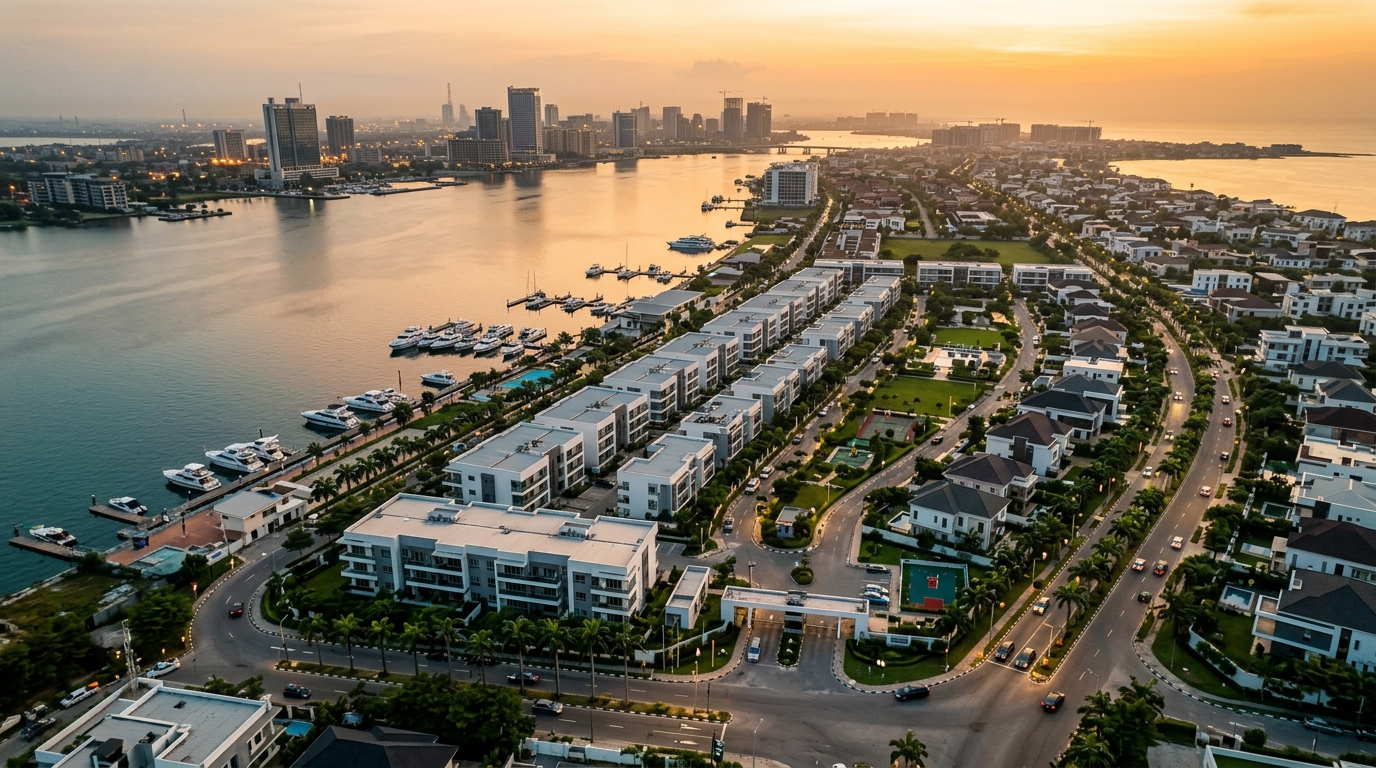
NREIT’s 30.4 Billion Series 6 Offer: How Africa’s Largest REIT Raise Impact Real Estate Investing in 2026
Arguably, Nigeria’s real estate investment space just had one of its most unambiguous signals of approval. Fresh off a phenomenal 333.6% year-on-year growth in profit before tax, the Nigeria Real Estate Investment Trust (NREIT) is currently raising funds to the tune of 30.4 billion through its Series 6 offer, every single kobo of which will be deployed in Nigeria’s real estate investment ‘next big thing’ – premium residential and logistics properties.
What this really means is that, even if you are not an institutionally sized investor, fractional platforms might be a growing solution to access a similar growth narrative. In this piece, we dive into NREIT’s strategy, the implications of the published figures, the use of proceeds, and what to look out for, for anyone eyeing real estate investments in Nigeria in 2026.
What NREIT Actually Announced
Already the biggest REIT in Nigeria with assets of more than ₦205 billion, NREIT is now offering ₦30.4 billion through its Series 6 Offer to increase its holdings. This comes at the heels of an impressive first quarter performance, where NREIT saw its profit before tax jump 333.6% to ₦3.19 billion from ₦736.6 million in Q1 2025.
This statistic forms just the headline among many others contained in the results. For Q1 2026 alone, NREIT reported:
• ₦4.45 billion revenue, 416.5% growth year on year
• ₦3.19 billion profit before tax
• 21 consecutive quarterly distributions to investors
It is the 21 consecutive quarterly distributions that are the numbers to focus on. This indicates that the fund has maintained its consistency in distributing profits to its investors even while going through different economic cycles in the country, including currency fluctuations and inflation over the last two years.
Why an Institutional Capital Raise Matters Beyond NREIT
In addition to providing financing for itself, NREITs allocate billions of naira that induce changes to its market environment in some tangible ways:
• As a result of the influx of money into the market, there will be an increase in the number of professional, well-managed developments compared to ad-hoc projects.
• There will be increased confidence in the real estate market, and it will become easier for another fund or developer to access finance on similar terms.
• Construction standards will improve due to the higher due diligence and governance requirements of institutional capital compared to individual and bank-financed projects.
The continuing growth of NREIT, therefore, is a sign that professionally managed real estate is one of the most robust asset classes in Nigeria despite inflation, increased construction costs and exchange rate risks.
Where the ₦30.4 Billion Is Actually Going
The more interesting part of the announcement isn’t the size of the net capital, it’s the allocation.
Premium Residential Developments
The desire for quality homes is constantly increasing in Lagos, Abuja, and Port Harcourt, due to the growth of investments from the diaspora, an increase in the number of wealthy people, multinational companies’ demand for offices and homes, and the trend towards professionally organised living rather than informal self-built housing. With the help of institutional funding, it becomes easier to satisfy this need, while improving the quality of construction in the process.
Logistics Warehouses
Unlike premium residential apartments, warehousing never makes the headlines. At the same time, it may become one of the least noticed investment opportunities in Nigeria over the next ten years. With the development of e-commerce, retail sector, and creation of the manufacturing companies’ logistics networks, the demand for modern warehousing premises will only grow. The logistics assets can provide investors with a particular combination, which they cannot find anywhere else in the commercial real estate of Nigeria – longer lease periods, more predictable rental payments, and cheaper maintenance compared to standard retail or office spaces. In all likelihood, institutional funds will move into this area ahead of others.
A Sign of a Maturity of the REIT Market
The REIT sector in Nigeria is currently relatively small compared to other established foreign markets, but offerings such as NREIT’s Series 6 Offer show an industry that is continuously developing. A successful raise of this magnitude tends to pave the way for:
• Increased institutional investments in the industry
• Further listing of REITs at the Nigerian Exchange Group
• Increased overall market liquidity
• Increased availability of professionally managed real estate for ordinary citizens
For the developers, this means additional sources of financing outside of the conventional loan financing from banks – which is important since financing in Nigeria has been very limited. For the investors, this provides additional methods of investing in the growth of the real estate market without necessarily buying out an entire property.
The practical challenge here is that NREIT’s Series 6 Offer was built for scalability, not for smallish amounts of flexibly held capital. The structure with large allocations, formalised applications, and a specific targeting of the high net worth individual or institution, not the individual investor. Historically premium Nigerian real estate behaved well, and this was accessible to the very rich or well connected.
Smaller investors typically had only one option to invest in property – using illiquid, informal funding and buying access to assets.
This gap is beginning to close.
How Jodoa Digi-Homes Turns This Trend Into an Advantage for Everyday Investors
It is here that the REIT’s shift (the influx of institutional money into high-end residential and logistics properties) becomes pertinent for individual investors in addition to fund managers.
With Jodoa Digi-homes, individual investors are able to invest fractionally in a selected number of quality assured projects in Nigeria, Dubai and the United Kingdom without necessarily having the capital that an institutional-sized investment would entail. Some of the factors which make this true value addition instead of mere marketing ploy include:
- Reduced entry barriers: Investing fractionally allows one to invest in high-end professionally managed developments which are exactly the kind of assets sought by institutional money, such as that of NREIT, without having to buy the whole property.
- Diversification: Investing fractionally in several projects located in different parts of the world (Nigeria, Dubai, UK) becomes easy as opposed to investing in a single property.
- Development-stage access: Beyond individual investors, Jodoa supports developers directly through joint ventures and equity funding, helping quality projects reach completion; the same kind of capital-access problem that pushes institutional money toward logistics and premium residential in the first place.
- Access to Liquidity: A solution to the main structural weakness in Nigeria’s real estate industry, as traditional Nigerian property is notoriously difficult to sell and get out of quickly. Jodoa leverages tokenisation via blockchain to provide fractional ownership which is easier to access, manage, and get out of than the regular whole property investment.
Simply put, NREIT’s fundraising is institutional money investing in anticipation of a trend. One way to invest in the same trend as the institutions is through Jodoa Digi-Homes and much more affordably too.
What This Means for Different Types of Investors
- Small capital investors: It is a better option than attempting to compete with institutional minimums.
- Diaspora investors: Ease of cross-jurisdictional access via one platform for Nigeria, Dubai, and the UK, whereas otherwise there would be several different processes involved.
- Developers: Institutional fundraisers such as those by NREIT, as well as joint-venture and equity financings such as those offered by Jodoa.
- Long-term investors: With the inflow of institutional money into logistics and high-end residential, as well as the development of the REIT market, this suggests that professionally managed real estate in Nigeria is an asset class which will endure over the long run despite inflationary pressures.
Conclusion
The NREIT 30.4 billion Series 6 Offer, then, isn’t merely an impressive fund-raising feat. It is a precursor of what to expect from institutional capital going forward in Nigeria real estate: prime residential space and logistics, and a chance for developers to access more finance. An indication for the industry to up its game. And a prompt to private investors to consider opening the door to professionally managed high-quality real estate investment via portals such as Jodoa Digi-Homes.
Sources & References
-
- NREIT Series 6 Offer Circular (July 2026) – https://proshare.co/articles/nreit-launches-n30.4bn-series-6-offer-to-expand-commercial-real-estate-portfolio?menu=Market&classification=Read&category=Stock%20%26%20Analyst%20Updates
- Nairametrics – NREIT’s profit before tax jumps 333.6% to ₦3.19 billion in Q1 2026 – https://nairametrics.com/2026/06/26/nreits-profit-before-tax-jumps-333-6-to-n3-19-billion-in-q1-2026/
- BusinessDay – Operator foresees growth in Nigeria’s REIT market as more investors step in – https://businessday.ng/real-estate/article/operator-foresees-growth-in-reits-market-as-more-investors-step-in/
- Jodoa Properties – Digi-Homes and Fractional Ownership Resources – https://jodoaproperties.com/service/jodoa-digi-homes/


Contact Jodoa Properties for professional advice on investing in the Nigerian real estate market. Jodoa Properties serves investors, developers and diaspora clients in Nigeria. Contact our advisory services for professional consultation.
 Social Share:






Can Foreigners Buy Property in Nigeria? 2026 Guide
Yes, foreigners can buy property in Nigeria, but rarely outright. Under the Land Use Act, you hold a right of occupancy of up to 99 years, and most international and diaspora investors buy through a Nigerian company that can be 100% foreign owned. This 2026 guide explains the law, Governor’s Consent, the documents to verify, the taxes and fees that apply, and how to purchase safely, even from abroad.
05, Jun 2026

12 Point Checklist For Buying Off-Plan Properties In Nigeria
A complete 12-point checklist for buying off-plan property in Nigeria. Covers title verification, LASRERA registration, Purchase Agreements, escrow payments, and infrastructure obligations — with market data for Lagos and Abuja.
22, May 2026




Nigeria Real Estate Overtakes Oil: A Seismic Shift for Investors
It’s official: real estate has nudged aside oil and gas in Nigeria’s economic hierarchy. According to the 2025 National Bureau of Statistics (NBS) rebasing report, the sector is now the nation’s third-largest economic engine, sitting just behind crop production and trade.
10, Apr 2026