
Trading Driven Returns Before the Roof Is On
 22, Apr 2026

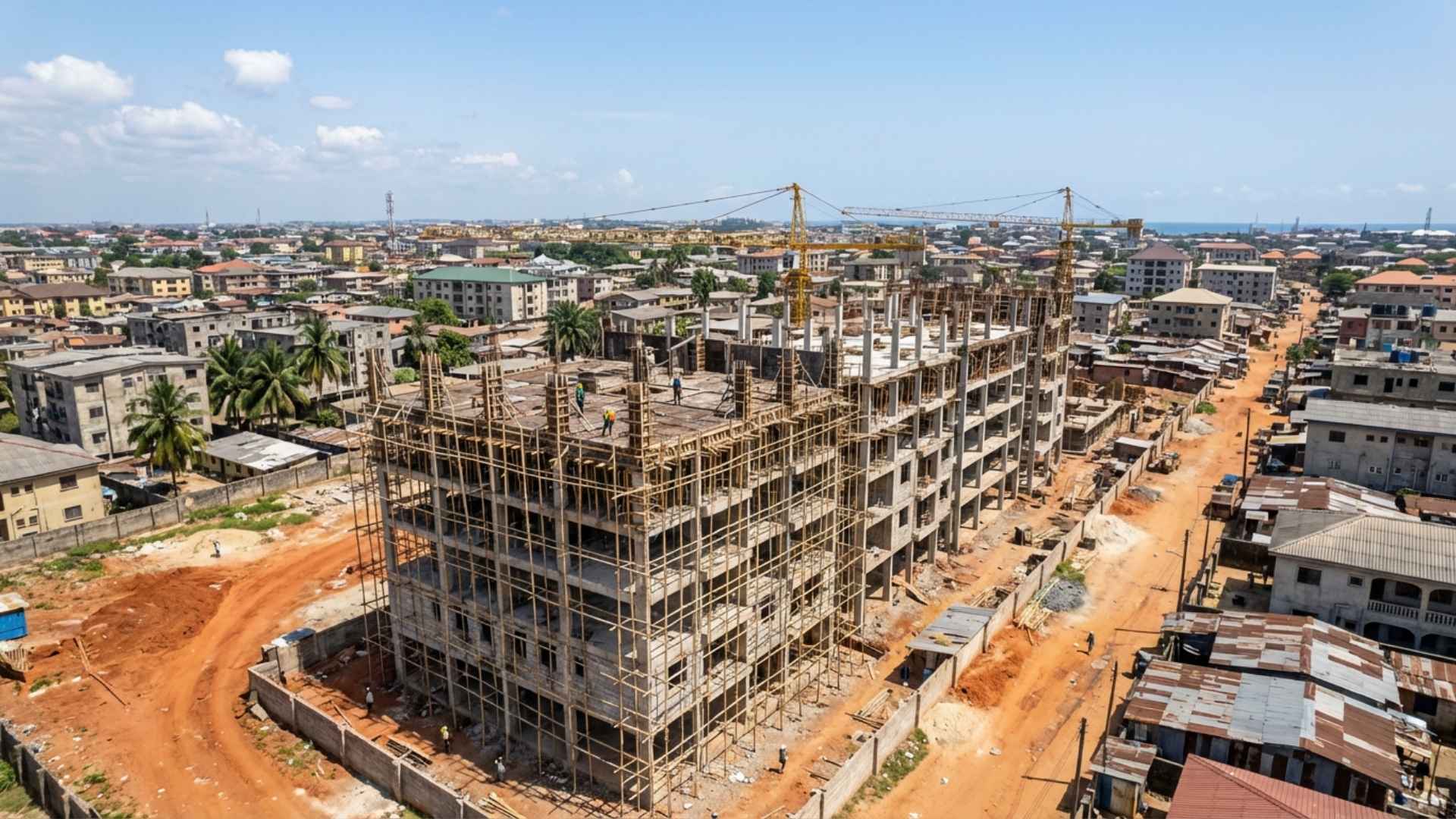
Most Nigerian property investors know the routine. You commit capital, wait for the build to finish, find a tenant, and only then does any income arrive. In practice the wait runs longer than advertised. Around 70% of Nigerian construction projects experience significant delays (Source: Academia.edu), so a two-year build routinely becomes three or four. Through all of it, your capital earns nothing. In Nigeria’s macro environment, that is not a neutral outcome. It is a quantifiable loss.
The Cost of Dead Capital
Headline inflation averaged above 30% through 2024, peaking at 34.6% in November before the NBS rebasing brought it down to around 15 to 17% by late 2025 (Source: NBS Nigeria). A naira locked in an off-plan purchase for 36 months at that rate is, in real terms, a considerably smaller naira by the time keys are handed over. Construction cost escalation compounds the problem. Cement prices rose 74 to 120% between 2023 and 2024, and iron rod increased by over 100% in the same period (Source: The Guardian Nigeria). These cost shocks routinely stall timelines and extend the zero-income window further.

Rental yields do not offset this. Gross yields in Lagos prime areas sit between 3% and 5%, rising to 6 to 8% in mid-market locations such as Ajah and Yaba (Source: The Africanvestor). Neither figure is accessible during construction. The investor in a traditional off-plan structure absorbs inflation in full throughout the build phase, with no income to show for it.
How Jodoa Addresses This
Jodoa Properties structures its investment offering differently. Rather than requiring investors to wait until project completion before any return is disbursed, Jodoa offers two distinct return structures depending on the investor’s preference and the nature of the opportunity.

The first is trading driven returns during construction, where periodic income is released from the point of investment, before handover. The capital works from day one.
The second is accrued returns at completion, where the investor receives the full return at project handover, inclusive of any capital gain generated over the construction period.
This is a structural departure from the conventional Nigerian off-plan model, where the investor’s position during construction is entirely dependent on the hope of price appreciation at completion and rental income thereafter. Under Jodoa’s model, returns are not contingent on tenants, occupancy rates, or resale timing. The structure is agreed at the point of entry.
The Cash Flow Difference Is Material
In an environment where the CBN Monetary Policy Rate sat at 27.5% as recently as November 2024 (Source: Central Bank of Nigeria) and over 97% of property transactions are cash-based (Source: Oxford Business Group), any income stream during a construction cycle carries real and measurable liquidity value. Whether returns are distributed periodically or accrued through to completion, the key distinction from a traditional off-plan position is that the investor’s capital is actively structured to generate a return rather than sitting idle through the build.
Who This Suits
The investor profiles this approach serves most directly are those with defined income requirements: retirees, diaspora investors who cannot actively manage holdings, and portfolio builders who need clear visibility on what their capital generates during a construction window. This is not a speculative play. It is a structured investment decision, one that becomes more rational the longer inflation stays elevated and construction timelines stay unpredictable.

The Arithmetic
Nigeria’s housing deficit currently stands at 14.9 million units and capital formation in the sector remains almost entirely cash-driven (Source: Nigeria Housing Market). Demand for quality residential stock continues to outpace supply. In that context, the question is not whether to hold real estate. It is whether your capital is working while you hold it. Dead capital is a cost. In Nigeria’s current environment, it is a significant one.
How to Get Started
Understanding the macro picture is the first step. The real work is knowing which corridors have actual infrastructure behind them rather than just market talk, which developers have verifiable completion records, and which price points are moving in the current cycle.
At Jodoa Properties, our Nigeria advisory team works with investors at every stage, from reading the market to assessing specific projects to completing transactions. Whether the focus is land banking, off-plan investment, or ready property, we provide the guidance and access needed to make an informed decision.
For a detailed illustration of projected returns under either structure, our investment advisors are available to walk through the specifics. Reach out via jodoaproperties.com/ng/contact-us or call 0700 225 5636 to get started.
 Social Share:
